


Our Muscles Are an Endocrine System
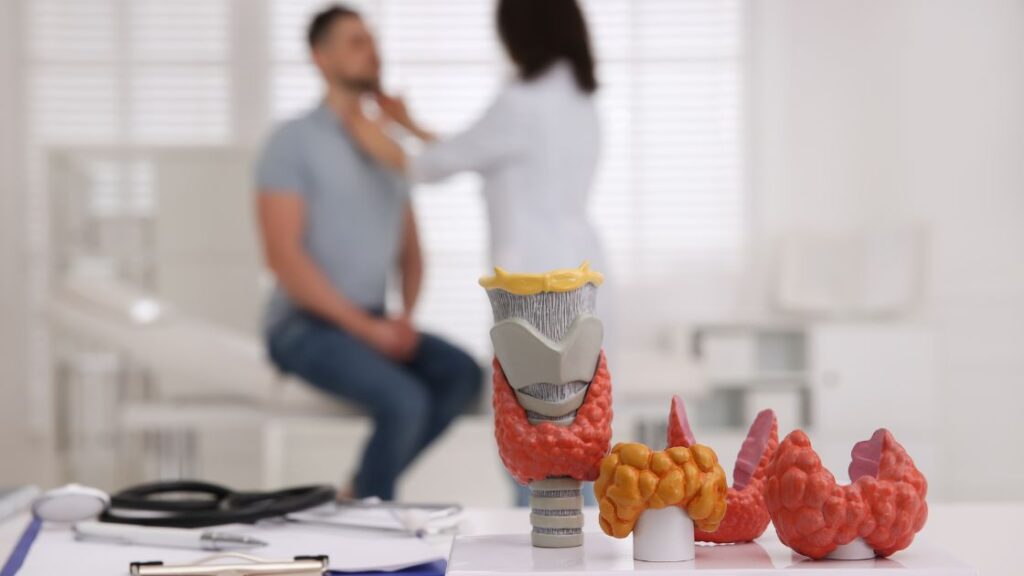
The endocrine system is the body’s complex network of glands that produce and release hormones. These hormones are chemical messengers that use the bloodstream as a channel to communicate with organs and tissues in order to regulate various systemic processes – growth, reproduction, mood, and tissue functioning, to name a few. Vital structures of the endocrine system include the pituitary gland, thyroid, adrenals, pancreas, ovaries, testes, pineal gland, and parathyroid glands.
While generally not considered part of the endocrine system, skeletal muscles do function as their own endocrine system and have a profound impact on our immunity, energy, metabolism, and sleep cycle. This is because in addition to its main function of moving the body, muscular tissue communicates with other organs by secreting myokines – molecules that, similar to the hormones of the endocrine system, act as chemical messengers.
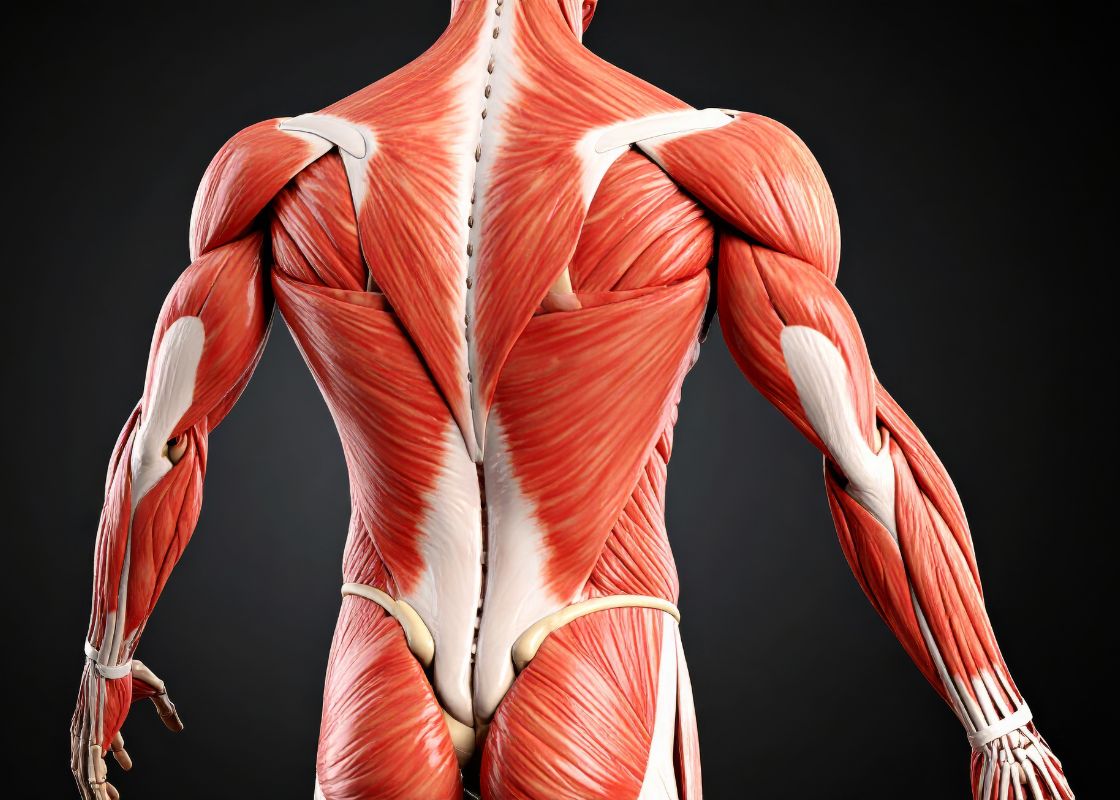
Here Is a Deeper Explanation for How Muscles Work Like an Endocrine System, and Why Having More Muscle Mass Increases Our Survivability
Muscle as an Endocrine Organ
Myokines, as mentioned above, are signaling proteins. They are secreted in response to muscular contraction and are most abundant during physical exercise. Once released, myokines surge into the blood stream and send messages to the brain, liver, bones, gut, adipose tissue, and immune system – all in a pursuit to regulate inflammation, metabolism, and the healing process.
So while they aren’t literally hormones, myokines are sometimes called the “muscle hormones” because they do more than just address issues located inside muscular tissue – they also send signals that affect distant organs and influence a wide range of bodily processes.
Muscle and Immunity
When one endures illness, injury, or stress, muscle mass acts as the body’s protein reserve. This is because skeletal muscle contains a high concentration of amino acids – organic compounds responsible for repairing wounds and damaged tissues, and also boosting the immune system.
When you’re sick or injured, the body requires extra protein for tissue repair and immune cell production. If you aren’t ingesting enough protein, which is common when battling an illness or recovering from an injury, your body needs to break down muscular tissue in order to release amino acids into the bloodstream.
Because of this, weakened or sedentary muscles are correlated to higher levels of inflammation and lower immune function, whereas stronger muscles increase one’s chance for surviving illness and bouncing back from an injury.
Muscle, Energy and Metabolism
Glucose uptake is the process of transporting glucose from the bloodstream and into cells. Muscles, being the largest site for this process, play a vital role in glycemic control and the prevention of insulin resistance.
In addition to regulating blood sugar, higher muscle mass is also linked to energy efficiency and improved ability to burn fat. Myokines signal the fat cells to release fatty acids into the blood stream, which makes them available for energy use during exercise or any vigorous activity. The higher your muscle mass, the higher your resting metabolic rate – meaning your body is better able to burn calories, even when at rest.
Under-developed muscles, on the other hand, are linked to weight gain, fatigue, and long-term metabolic disorders such as type 2 diabetes.
Muscle and Sleep
Healthy muscle mass enhances hormone stability – a balance which has a profound impact on one’s sleep.
Physical exercise influences a surge of serotonin and adenosine – two neurotransmitters that encourage restful sleep. Serotonin does this by reducing stress, and adenosine inhibits arousal. Being active also reduces levels of cortisol, the main stress hormone and major contributor to sleep disruption.
With that in mind – a sedentary lifestyle, as well as the low muscle health that comes with it, can be associated with insomnia, poor quality of sleep, and tiredness.
Now You Know!
Muscles do more than carry you and move you around – they communicate with the rest of your body and function like their own endocrine system. The stronger they are, the better they can support recovery, utilize energy, and promote restful sleep. Keep active and build muscle mass, as a more resilient body will make every day more survivable!


Katrina Jenkins
Author, Licensed Massage Therapist
Katrina Jenkins graduated from Towson University in 2013 with a Bachelor’s Degree in Health Science and worked as a nurse’s aide briefly before pursuing her true passion. She graduated from the Massage Therapy Institute of Colorado in April 2016 with honors and completed the Touch of Healers Scholarship Program the following summer. She has been a part of the Moyer Total Wellness Team since the summer of 2017.
Resources
Hoffmann, Christoph, and Cora Weigert. “Skeletal Muscle as an Endocrine Organ: The Role of Myokines in Exercise Adaptations.” Cold Spring Harbor Perspectives in Medicine, vol. 7, no. 11, 7 Apr. 2017, p. a029793, https://doi.org/10.1101/cshperspect.a029793.
Islam, Hashim, and Jenna B. Gillen. “Skeletal Muscle Mechanisms Contributing to Improved Glycemic Control Following Intense Interval Exercise and Training.” Sports Medicine and Health Science, 25 Jan. 2023, www.sciencedirect.com/science/article/pii/S2666337623000021, https://doi.org/10.1016/j.smhs.2023.01.002.
LabNews Media LLC. “Die Macht Der Myokine – Muskeln Als Endokrine Organe • LabNews.” LabNews • Daily News for the Life Sciences., 8 June 2025, labnews.io/die-macht-der-myokine-muskeln-als-endokrine-organe/. Accessed 27 Oct. 2025.
McPherron, Alexandra C., et al. “Increasing Muscle Mass to Improve Metabolism.” Adipocyte, vol. 2, no. 2, Apr. 2013, pp. 92–98, www.ncbi.nlm.nih.gov/pmc/articles/PMC3661116/, https://doi.org/10.4161/adip.22500.
Rogeri, Patricia S., et al. “Crosstalk between Skeletal Muscle and Immune System: Which Roles Do IL-6 and Glutamine Play?” Frontiers in Physiology, vol. 11, 16 Oct. 2020, https://doi.org/10.3389/fphys.2020.582258.
Seladi-Schulman, Jill. “Endocrine System Overview.” Healthline, Healthline Media, 12 Mar. 2022, www.healthline.com/health/the-endocrine-system.
Song, Jihun, et al. “Effect of Changes in Sleeping Behavior on Skeletal Muscle and Fat Mass: A Retrospective Cohort Study.” BMC Public Health, vol. 23, no. 1, 28 Sept. 2023, https://doi.org/10.1186/s12889-023-16765-7.
Weasler, RN, BSN , Patty . “Coffee Makes Me Sleepy: Reasons and How to Feel More Awake.” Verywell Health, 2024, www.verywellhealth.com/why-does-coffee-make-me-sleepy-8584745.
Photo Credit
Canva by Africa images
Canva by Max D Graphic Designer