


How Does Massage Therapy Relieve Chronic Pain?

Chronic pain, which is defined as pain that persists for over three months, is a very common experience. 1 in 5 adults in the United States, according to the CDC, are currently living with it. That’s approximately 50 million people struggling – and of those, about 17 million people are living with a degree of chronic pain that interferes with work and daily life.
There are many causes of chronic pain – back and neck pain due to poor posture, herniated discs or spinal stenosis; the different types of arthritis; pain conditions such as fibromyalgia; nerve-related conditions such as sciatica or neuropathy; headaches and migraines; direct injuries or trauma; post-surgical pain… the list goes on.
While medications and invasive procedures are often recommended and sometimes necessary, non-pharmaceutical and holistic options are also available for pain management. Massage therapy has become one of the most popular supplementary treatments when it comes to treating chronic pain. As more healthcare professionals are recommending massage therapy in recent years, it’s important to understand the reasons why it is so effective.
How Do the Effects of a Therapeutic Massage Remedy Chronic Pain?
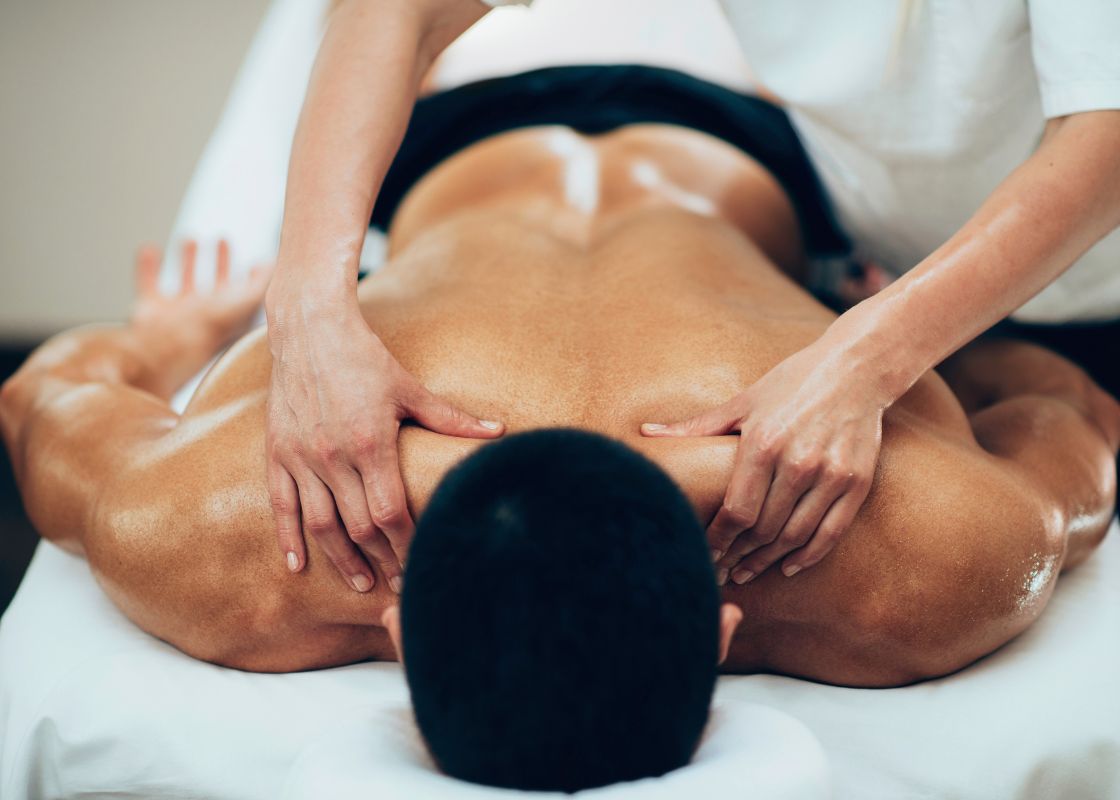
Relaxes Tense Muscular Tissue
Through direct mechanical pressure, the first step of any massage modality is to remove tension-causing knots from muscular tissue.
Almost all (if not all) adults have been plagued with muscle knots at some point or another. Desk workers, with their heads hanging forward and their shoulders arched, seem to have it worse than anybody else – but pretty much all the causes of chronic pain listed above are marked by muscle tension.
Untreated muscle tension can worsen chronic pain in many ways. For starters, hyper-contracted muscular tissue alters body mechanics, which leads to compensatory muscle use that strains the surrounding muscles – thus, creating even more painful knots throughout the body. Altered body movements also contribute to joint misalignment and postural changes, which not only worsen chronic pain, but can make recovery far more difficult.
Improves Circulation
The application of massage increases blood flow to congested tissues, delivering oxygen and nutrients to restricted areas while also removing metabolic waste products such as lactic acid. These aspects help to relieve chronic pain because damaged tissues are able to repair themselves more quickly when they are well-nourished. Additionally, the removal of inflammatory chemicals recreates space for the nutritious blood to be delivered.
Healthy circulation can also help to stabilize nerves and reduce their hypersensitivity, which are issues associated with the aforementioned chronic pain syndromes fibromyalgia and neuropathy.
Supports Immune Functioning
Staying on the topic of circulation, improved blood flow also has a positive impact on the immune system. Better circulation guides the pathogen-fighting immune cells towards affected areas with more efficiency, which assists the body’s natural pain-managing and anti-inflammatory responses.
Reduces Stress and Anxiety
Anxiety and the stress hormones associated with it can worsen chronic pain. At constantly elevated levels, the stress hormone known as cortisol exacerbates chronic pain through several means. It provokes the reactiveness of neurons in the brain, making the nervous system more sensitive to pain signals. High cortisol levels also reduce the body’s pain threshold, causing a phenomenon called allodynia. Allodynia is a condition that causes typically non-painful stimuli to elicit physical pain.
By calming the nervous system, massage therapy not only lowers cortisol levels, but it also promotes a surge of “happy hormones” that can have a soothing effect on chronic pain. Serotonin, dopamine, and endorphins are chemicals that improve mood and reduce pain perception.
Mobilizes Joints
When knots are removed and hyper-contracted fibers are lengthened, joints become more mobile. Mobile joints are both at decreased risk for chronic pain, and also better able to manage and/or recover from chronic pain.
While joint flexibility is important to everyone’s musculoskeletal health, regular joint range of motion exercises are a core part of managing arthritis and all other types of joint disorders. Regular joint manipulation lubricates the joints with synovial fluid and prevents tightening of the surrounding tissues. The result is less stiffness, which in turn eases chronic pain brought on by the functional limitations.
Promotes Restful Sleep
Through biological and psychological channels, poor sleep is simultaneously a result and an amplifier of chronic pain. Insomnia and sleep disturbances in general impair how the brain processes pain signals, causing hyperalgesia – a heightened sensitivity to pain.
Chronic pain conditions can often lead to sleep deprivation, and the resulting fatigue further decreases pain tolerance. Headaches are particularly common among those with sleep struggles.
Looking back on the section about stress and anxiety reduction, the surge of serotonin that massage therapy encourages plays a key role in high quality sleep. Serotonin is converted into melatonin, a hormone that regulates the circadian rhythm (sleep-wake-cycle) and reminds the body when it’s time to go to sleep.
Now You Know!
The inner workings of your body can combat chronic pain by receiving massage therapy. Schedule a massage with one of our talented massage therapists today!


Katrina Jenkins
Author, Licensed Massage Therapist
Katrina Jenkins graduated from Towson University in 2013 with a Bachelor’s Degree in Health Science and worked as a nurse’s aide briefly before pursuing her true passion. She graduated from the Massage Therapy Institute of Colorado in April 2016 with honors and completed the Touch of Healers Scholarship Program the following summer. She has been a part of the Moyer Total Wellness Team since the summer of 2017.
Resources
AMTA (2022). The Rise of Massage Therapy in Pain Management. [online] American Massage Therapy Association. Available at: http://amtamassage.org/publications/massage-therapy-journal/massage-therapy-in-pain-management/ [Accessed 17 Jul. 2025].
Borsook, D., Youssef, A.M., Simons, L., Elman, I. and Eccleston, C. (2018). When pain gets stuck. PAIN, 159(12), pp.2421–2436. doi:https://doi.org/10.1097/j.pain.0000000000001401.
Choudhury, D.M. (2024). Understanding the Causes of Allodynia: A Comprehensive Insight. [online] PhysicsCore. Available at: https://physicscore.com/articles/understanding-causes-of-allodynia/ [Accessed 17 Jul. 2025].
Grubbs, H. and Manna, B. (2023). Wound Physiology. [online] National Library of Medicine. Available at: https://www.ncbi.nlm.nih.gov/books/NBK518964/.
Lebert, RMT, R., Noy, MSc, RMT, M., Purves, MSc, RMT, E. and Tibbett, PhD, LMT, J. (2022). Massage Therapy: A Person-Centred Approach to Chronic Pain. International Journal of Therapeutic Massage & Bodywork: Research, Education, & Practice, 15(3), pp.27–34. doi:https://doi.org/10.3822/ijtmb.v15i3.713.
Mak, S., Allen, J., Meron Begashaw, Isomi Miake-Lye, Beroes-Severin, J., Gerardo De Vries, Lawson, E. and Shekelle, P.G. (2024). Use of Massage Therapy for Pain, 2018-2023. JAMA network open, 7(7), pp.e2422259–e2422259. doi:https://doi.org/10.1001/jamanetworkopen.2024.22259.
Van Looveren, E., Bilterys, T., Munneke, W., Cagnie, B., Ickmans, K., Mairesse, O., Malfliet, A., De Baets, L., Nijs, J., Goubert, D., Danneels, L., Moens, M. and Meeus, M. (2021). The Association between Sleep and Chronic Spinal Pain: A Systematic Review from the Last Decade. Journal of Clinical Medicine, 10(17), p.3836. doi:https://doi.org/10.3390/jcm10173836.
Watson, S. (2017). What Is Chronic Pain Syndrome? [online] WebMD. Available at: https://www.webmd.com/pain-management/chronic-pain-syndrome-overview.
Photo Credit
Canva by akaratwimages
Canva by sciencephoto