


The Connection Between Fitness and Massage: How Our Four-Step Protocol Supports Your Goals
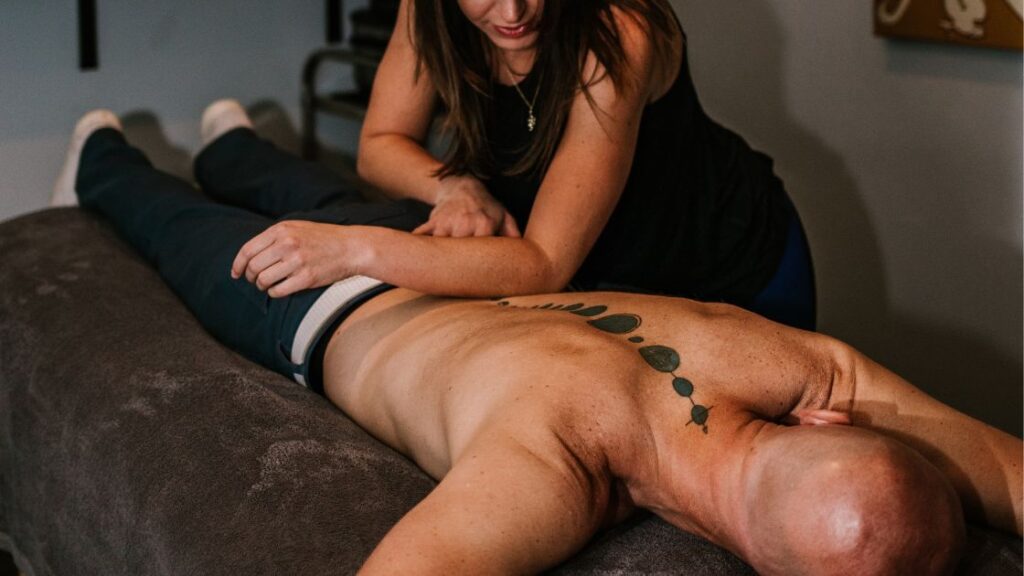
When people consider improving their level of fitness, they’re likely thinking about a gym membership, picking up some weights, or going on a long run.
While regular exercise is essential to one’s overall health, there’s another aspect of fitness that too often goes overlooked – maintenance and recovery. If you don’t have those, whatever progress you’ve made slows down and the injuries set in. Motivation can easily diminish when your results fizzle out and your body hurts.
So that’s where massage therapy comes into picture! At Moyer Total Wellness, we follow a four-step massage therapy protocol specialized to not only relieve soreness but to also help you move freely, recover faster, and get the most from your workouts. Read on to see why it works and how it ties into your fitness routine!
Why Physical Fitness Depends on More Than Just Exercise
Working out, especially if you’re new to an exercise or haven’t trained in a while, challenges your body. It pushes your muscles, joints, and connective tissues to adapt against resistance. With consistency and proper form, training makes you stronger, leaner, and healthier.
But with that said, intense or repetitive activity can also create musculoskeletal imbalances. Knots restrict circulation and create pain. Tight muscles pull joints out of alignment. Overstretched muscles become weak. Locked-short fibers restrict mobility.
If these imbalances go unaddressed for too long, they might prevent you from reaching your fitness goals. And that’s where incorporating massage therapy into your fitness routine can be a game changer.
Our Four-Step Massage Therapy Protocol
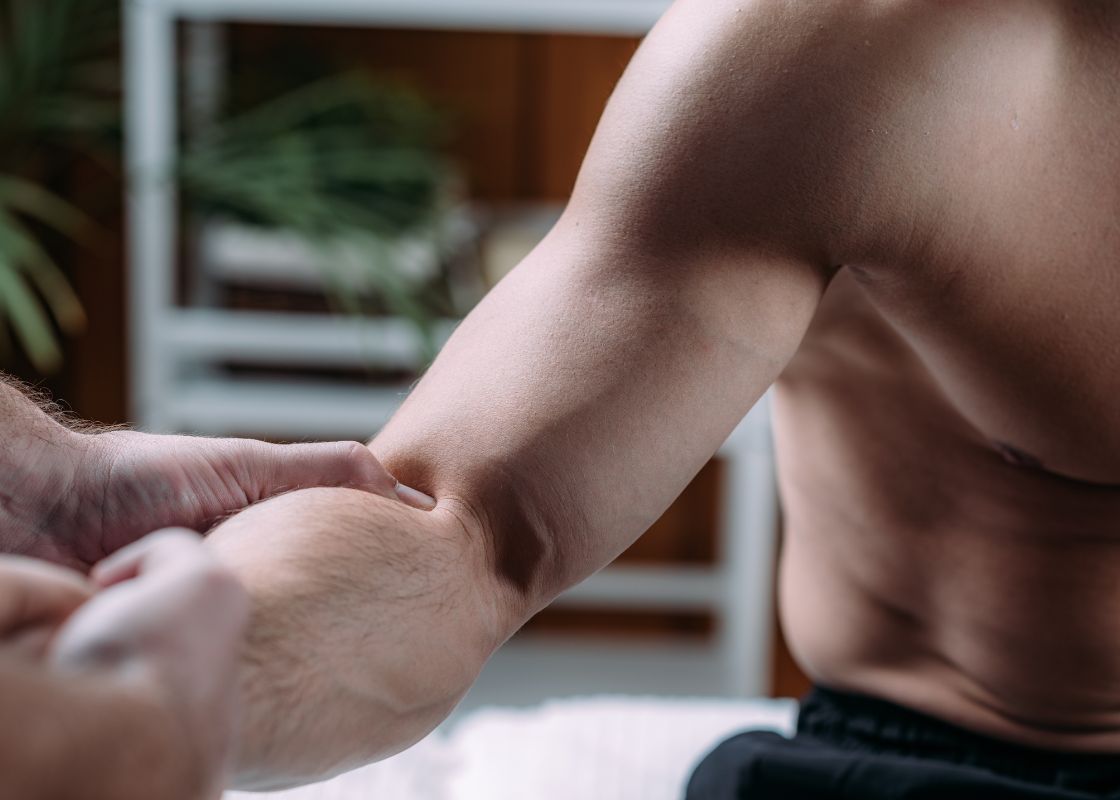
Step 1: Remove Knots from Tight Muscles
Muscular adhesions, or knots, are tense spots embedded inside muscle tissue that cause pain, congest circulation, and restrict movement. When knots are released through massage therapy, tension decreases and circulation is recovered – allowing the muscles to function more freely and efficiently. For athletes or those wanting to lead a more active lifestyle, this would mean less muscle aching and smoother movement patterns.
Step 2: Lengthen Shortened Muscle Fibers
Musculoskeletal overuse caused by repetitive training can cause muscle fibers to lock short. A hyper-contracted muscle has limited range of motion, which can lead to poor body mechanics and increase one’s risk for workout-related injuries. Through the lengthening of muscle fibers, massage therapy increases flexibility, which won’t just make exercise more effective – it will make it safer, too.
Step 3: Strengthen Weak Muscles
When one muscle group tightens, its opposing muscle groups overstretch and weaken. An example of this would be a tight hip flexor weakening the gluteal muscles, leading to pain in both areas and impeding workouts that target them. Our protocol includes techniques (such as PNF stretching) that strengthen underused muscles. Their regained endurance will lead to improved balance and stability.
Step 4: Mobilize Restricted Joints
Stiff joints limit your range of motion and affect how your entire body moves. Joint mobilizing techniques improve alignment, reduce musculoskeletal wear and tear, and allow for more fluid, efficient movements. This is crucial to anyone seeking to enhance athletic performance or maintain a healthy level of activity.
A Recap: How Massage and Fitness Work Together
In combination with a regular exercise routine, our specialized four-step massage therapy protocol will help you:
- Speed up post-workout recovery
- Enhance flexibility and joint range of motion
- Reduce risk of exercise-related injuries
- Build strength
- Maximize athletic performance
- Increase energy levels
Do more than just relax on the table – create a body that moves efficiently, adapts well, and maintains its strength for the long run.
Now You Know!
In order to improve physical fitness, it shouldn’t just be about long, strenuous stints at the gym. Self-care is just as important! By pairing up your fitness routine with massage therapy, your body receives the ultimate support for better recovery speed, adaption, and performance.
If you really want to take your fitness to the next level, consider adding our four-step massage therapy protocol to your health plan. Your body will thank you.


Katrina Jenkins
Author, Licensed Massage Therapist
Katrina Jenkins graduated from Towson University in 2013 with a Bachelor’s Degree in Health Science and worked as a nurse’s aide briefly before pursuing her true passion. She graduated from the Massage Therapy Institute of Colorado in April 2016 with honors and completed the Touch of Healers Scholarship Program the following summer. She has been a part of the Moyer Total Wellness Team since the summer of 2017.
Resources
“Maintain-Healthy-Muscles | Benefits-of-Massage | Massage | Treatments | Physio.co.uk | Leading Physiotherapy Provider in Liverpool and Manchester.” Www.physio.co.uk, www.physio.co.uk/treatments/massage/benefits-of-massage/maintain-healthy-muscles.php.
“Massage Therapy for Those Who Exercise | AMTA.” American Massage Therapy Association, www.amtamassage.org/about/position-statements/massage-therapy-for-those-who-exercise/.
“Prevents Injury – Benefits of Massage – Massage – Treatments – Physio.co.uk.” Www.physio.co.uk, www.physio.co.uk/treatments/massage/benefits-of-massage/prevents-injury.php.
Yildiz, Suat, et al. “Acute Effects of Static Stretching and Massage on Flexibility and Jumping Performance.” Journal of Musculoskeletal & Neuronal Interactions, vol. 20, no. 4, 2020, p. 498, pmc.ncbi.nlm.nih.gov/articles/PMC7716682/.
Photo Credit
Moyer Total Wellness
Canva by microgen