


Why Massage Therapy Works Better When Combined With Chiropractic Care
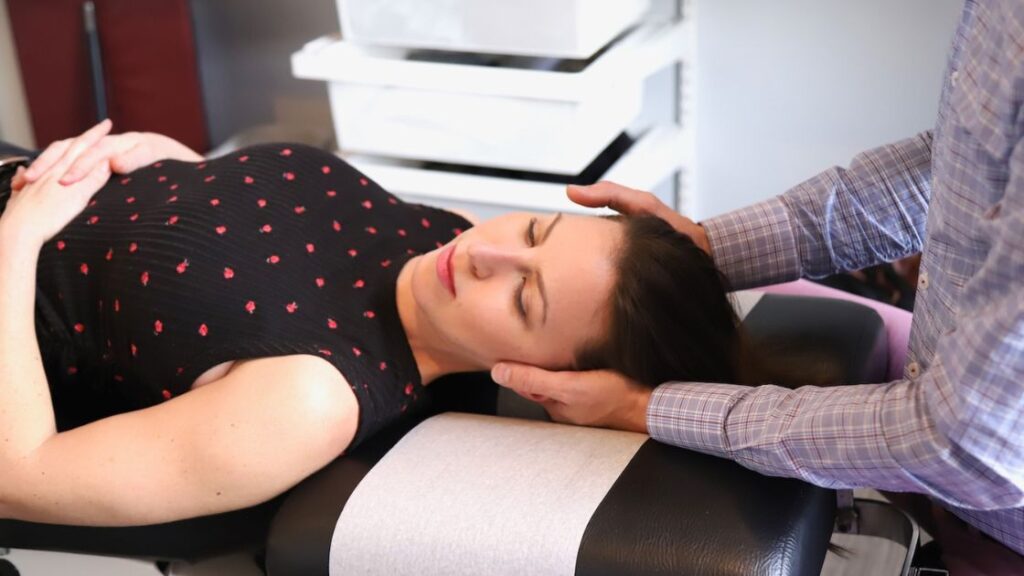
When it comes to natural pain relief, bodywork is often what comes to mind first. While many swear by massage therapy as their go-to, other types of manual treatment can enhance its benefits.
If you’ve never tried chiropractic care, or have only tried it by itself, combining it with massage therapy can produce better and longer lasting results when it comes to your overall health. At Moyer Total Wellness, we don’t view massage as a basic way to ease soreness before or after a chiropractic adjustment. Massage therapy is an essential part of our evidence based 4-step treatment protocol — a method designed to address the underlying causes of your pain and physical restrictions. Let’s get into why adding chiropractic care is a valuable addition.
The Issue With Treating Only One Piece of the Puzzle
Your body functions as an interconnected system with your muscles, joints, ligaments, tendons, and nervous system working synergistically. If one area is compromised, other parts of the body attempt to adjust in order to keep you moving.
Restricted joints, for example, can cause associated muscles and tendons to tighten when they try to protect the area. The resulting muscle tension then creates painful trigger points — limiting range of motion, and eventually weakening other muscle groups. Adjusting the joint without treating the surrounding tissues provides short term relief, but untreated tight muscles pull everything out of alignment and right back into the same dysfunction.
Massage therapy on its own can relieve muscle tension, but what if an underlying joint restriction is present? The muscles will tense up again as they do their best to stabilize the affected area.
That’s why combining chiropractic care with massage therapy can offer more benefits than just receiving one of the treatments.
How Our 4-Step Protocol Works for Massage and Chiropractic for Pain Relief
Our 4-step massage therapy protocol addresses the soft tissues first, creating a stronger foundation for improving muscle function and joint mobility. Here is a breakdown of our four-step massage therapy protocol and how chiropractic care can make it more effective.
Step 1: Remove Muscle Knots
The first step is relieving excessive muscle tension. Adhesed muscular tissues, which we know as “muscle knots”, impede circulation, limit motion, and often send referral pain to other different parts of the body. An example would be tight neck muscles causing headaches. Another is a trigger point in the glutes invoking pain that radiates down the leg.
Through first releasing these restrictions, the musculoskeletal system becomes more receptive to chiropractic adjustments and other corrective treatments.
Step 2: Lengthen Shortened Muscle Fibers
Tight muscular tissues tend to shorten over time if left untreated. Even after a chiropractic adjustment, short muscle fibers may continue to pull on joints out of alignment — an imbalance that can lead to movement restrictions.
Massage therapy that focuses on lengthening muscles and fascia helps the tissues return to a healthy length. This improvement makes for increased flexibility and decreased tension throughout the body, creating balance that allows a chiropractic adjustment to hold longer.
Step 3: Strengthen Weak Muscles
Tightness isn’t always the main cause of muscle pain.
When another group of muscles, (usually the ones that execute the opposite actions of the tight muscles), is weak or becomes inhibited, neighboring muscles work harder to pick up their slack. The cycle of recurring stiffness and pain comes from this imbalance.
Once tension subsides and movement is restored, strengthening exercises help you regain proper muscle functioning. Strong muscles are better supporters for the spine and joints — a well supported body maintains the benefits offered by therapeutic massage and chiropractic care.
Step 4: Mobilize Restricted Joints
After the neighboring muscles have been addressed, the body becomes more responsive to joint mobilization techniques.
Chiropractic adjustments and joint mobilization increase range of motion, improve body mechanics, and reduce unneeded stress on the musculoskeletal system.
As the loosened muscles aren’t fighting against an adjustment, many patients experience long-term pain relief and improvements in overall functioning.
Why the Four Steps Work Together
Each step is achievable when the one before it is completed.
Eliminating knots makes for easier muscle lengthening. Healthily long tissues move more efficiently, which allows weak muscles to respond appropriately to strengthening exercises. When the muscles start functioning properly, a chiropractic adjustment can more effectively restore joint range of motion.
Skipping a step can leave part of the problem unresolved. Restore healthy movement patterns through each step of the protocol and prevent the dysfunction from coming back.
Conditions That Often Benefit From Combined Care
Common musculoskeletal conditions that respond well to a combination of massage therapy and chiropractic care include:
- Neck pain
- Low back pain
- Headaches
- Shoulder pain
- Sciatica
- Muscle strains
- Sports injuries
- Postural issues
- General body stiffness
- Reduced mobility
No two patients are the same. At Moyer Total Wellness, treatment plans are individualized based on your unique symptoms, movement habits, and goals.
A Complete Treatment
Massage therapy and chiropractic care are complementary treatments. Our 4-step protocol ensures that your muscles and joints are addressed together. We’re not here to simply mask your symptoms. By removing knots, lengthening locked-short tissues, strengthening weak muscles, and restoring joint range of motion, we work to correct the main factors contributing to your pain.
Whether it’s an injury, chronic pain, or a goal to move more comfortably — combining massage therapy with chiropractic care may help you achieve more complete results for the long term.


Katrina Jenkins
Author, Licensed Massage Therapist
Katrina Jenkins graduated from Towson University in 2013 with a Bachelor’s Degree in Health Science and worked as a nurse’s aide briefly before pursuing her true passion. She graduated from the Massage Therapy Institute of Colorado in April 2016 with honors and completed the Touch of Healers Scholarship Program the following summer. She has been a part of the Moyer Total Wellness Team since the summer of 2017.
Resources
ACP. (2015). American College of Physicians issues guideline for treating nonradicular low back pain | ACP newsroom | ACP. Acponline.Org. https://www.acponline.org/acp-newsroom/american-college-of-physicians-issues-guideline-for-treating-nonradicular-low-back-pain
Chou, R., Deyo, R., Friedly, J., Skelly, A., Hashimoto, R., Weimer, M., Fu, R., Dana, T., Kraegel, P., Griffin, J., Grusing, S., & Brodt, E. D. (2017). Nonpharmacologic therapies for low back pain: A systematic review for an American College of Physicians Clinical Practice Guideline. Annals of Internal Medicine, 166(7), 493. https://doi.org/10.7326/m16-2459
HAUK, L. (2017). Low back pain: American College of Physicians Practice guideline on noninvasive treatments. American Family Physician, 96(6), 407–408. https://www.aafp.org/afp/2017/0915/p407
Rubinstein, S. M., de Zoete, A., van Middelkoop, M., Assendelft, W. J. J., de Boer, M. R., & van Tulder, M. W. (2019). Benefits and harms of spinal manipulative therapy for the treatment of chronic low back pain: Systematic review and meta-analysis of randomised controlled trials. BMJ, 364(1689), l689. https://doi.org/10.1136/bmj.l689
Photo Credit
Photo Credit: Canva by studioroman