Cupping 101
Thanks to Michael Phelps and the 2016 Summer Olympics, cupping therapy, or myofascial decompression, has gained a lot of steam. Even though most people have heard of cupping, I’m still often asked what it is and how it works!
What is Cupping?
Cupping therapy has been used for thousands of years across many different traditional medicines. Today, acupuncturists, chiropractors, physical therapists, and massage therapists have brought this age old technique into their practices because of its therapeutic effects. Used today primarily for the treatment of pain, cupping therapy ultimately aims to create space and remove stagnation in tissue that is creating pain and dysfunction.
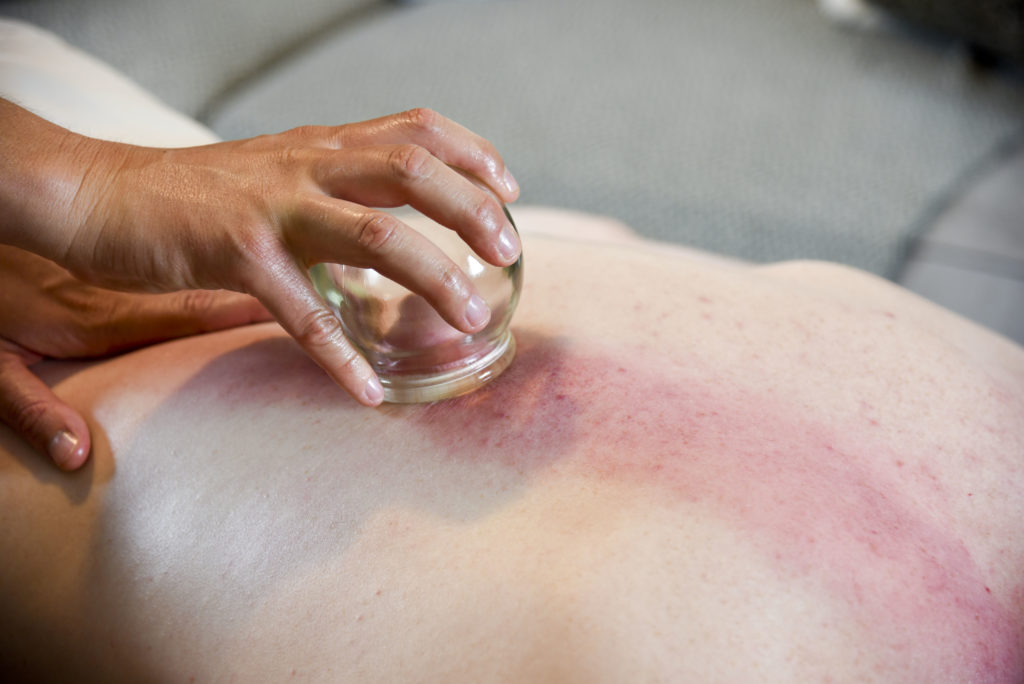
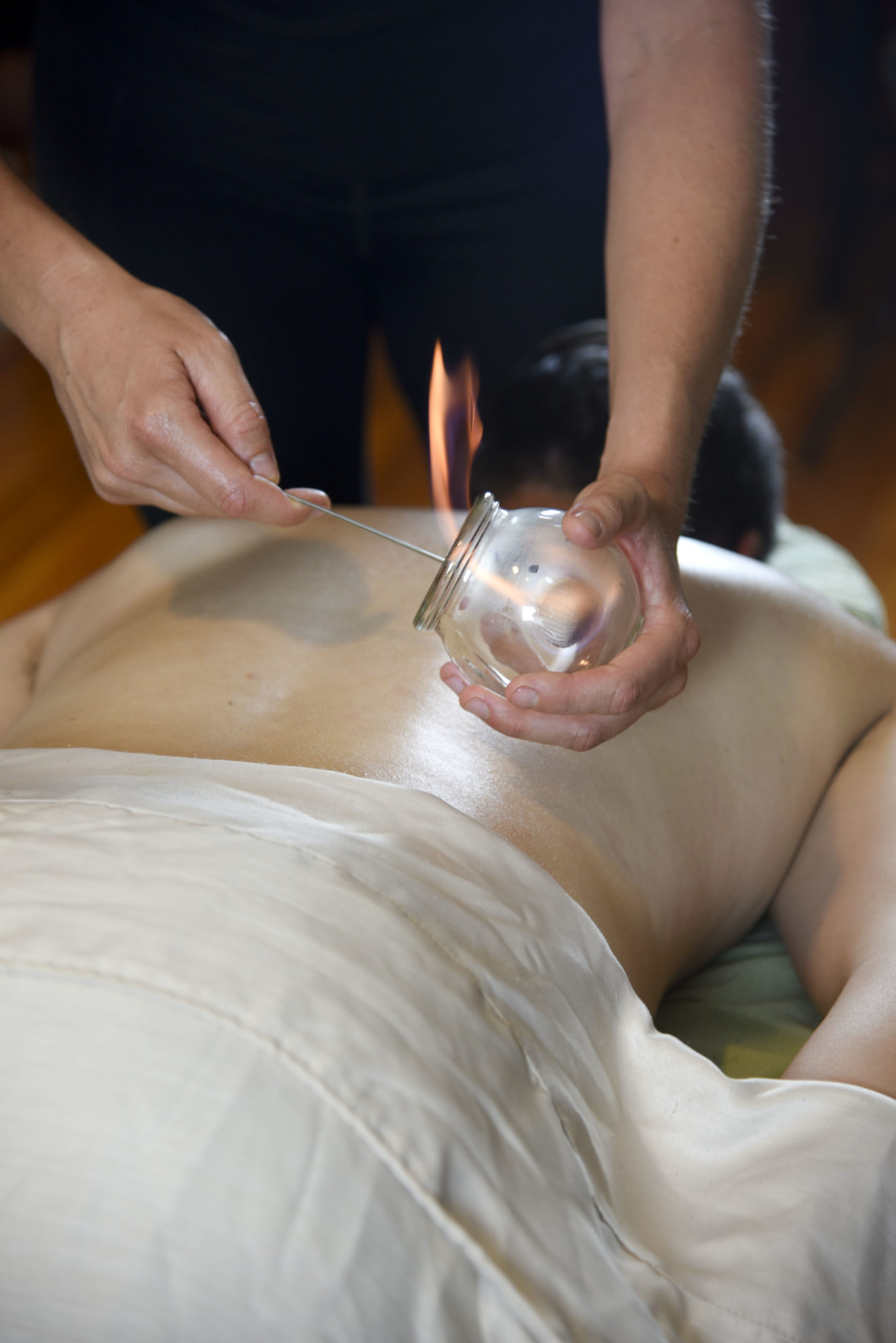
During a cupping therapy session, a partial vacuum is formed over the skin by means of heat or a pneumatic (air) pump. This pulls up the underlying skin, fascia, muscle, and other tissue into the cup, drawing blood to the area and creating space between the layers of tissue. Cups can be left on an area of dysfunction for 5-20 minutes. They can also be used in a sliding motion over a broader area of the body such as the back. According to Traditional Chinese Medicine (TCM) theory, areas of greater dysfunction and stagnation will have darker marks left behind after treatment. These marks last on average between 3-10 days.
Most of my patients find cupping very relaxing and describe it as feeling similar to a deep tissue massage.
How Does Cupping Work?
How cupping therapy provides relief from pain and dysfunction can be looked at through the lense of Traditional Chinese Medicine and Western Medicine. Both provide different and interesting outlooks on this technique.
|
TCM and Cupping ● Moves Qi and blood ● Removes stagnation ● Warms the tissue ● Opens channels/ meridians and alleviates pain |
Western Medicine and Cupping (myofascial decompression) ● Creates space between layers of tissue providing greater mobility ● Improves circulation ● Releases trigger points and tight muscles ● Brings fresh oxygen and nutrient rich blood to the area of dysfunction to promote healing |

While TCM and Western Medicine might differ in the words they use to describe how cupping works, it is clear that the end goal is the same; to get things moving, remove stagnation, and reduce pain.
Written by: Brooke Holmes, LAc
Photo Credit: Brooke Holmes
Read More from Our Blog