
Grip Strength Is a Marker of Health for Older Adults: Here’s Why
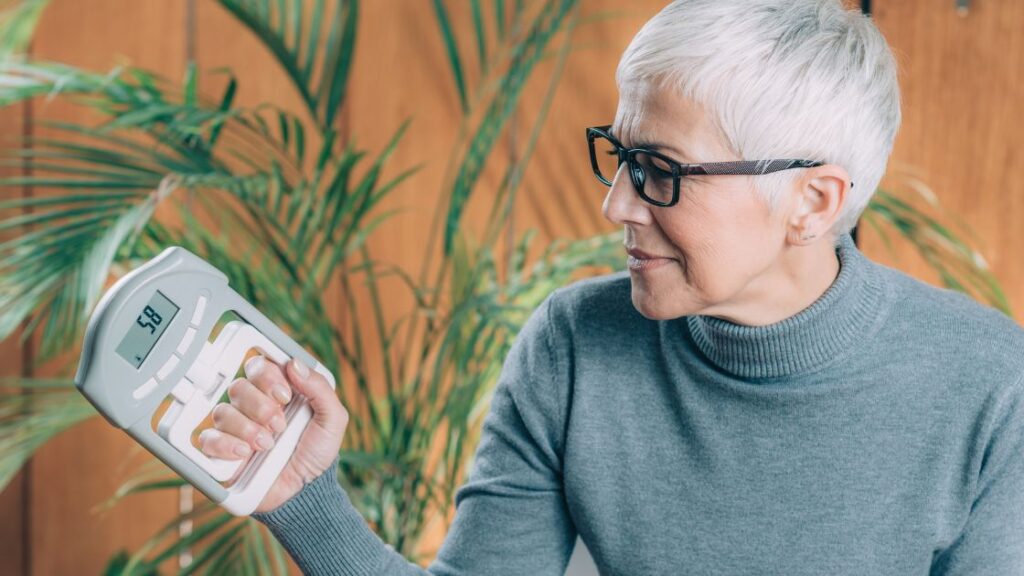
Grip strength, the extent of how strongly one can grasp onto an object, is more than just a measurement. Did you know that it’s actually an indicator of overall health, and that building it up is especially important to the wellbeing of the aging population?
The comprehensive research on the topic shows that a higher level of grip strength is correlated with longer lifespan, functional independence, and improved quality of life in older adults.
Here Are Some of the Reasons Why Everyone Should Start Strengthening Their Grip:
Warning Sign of Declining Health
With aging comes a natural loss of muscle mass and a resultant decrease in strength. Poor grip strength is a sign of sarcopenia (age-related frailty), increased risk for falls, and mobility limitations. These can all be precursors for the development of disability and the loss of independence.
Predictor of Cardiovascular and Mortality Risk
Studies have shown there is a link between low grip strength and a host of different health conditions. The risk of developing cardiovascular disease, the leading cause of death in the United States, not only increases when grip strength is poor – it’s often more predictive of mortality than health factors such as high blood pressure.
Correlation to Brain Health
Poor grip strength is also associated with increased risk of cognitive decline and dementia. One explanation for this is the fact that people who struggle with everyday activities due to physical limitations are less likely to be physically active. Studies show that lack of exercise is a major risk factor for developing dementia.
In addition to memory problems, clinical depression is also linked to low grip strength. As mentioned earlier, losing one’s ability to carry out physical activities of daily living is damaging to one’s overall health, and this issue becomes especially pronounced with advanced age. Being unable to participate in activities one once enjoyed can be devastating.
Reflection of Functional Ability
Here is a little bit of recap from the previous section – one’s level of grip strength is indicative of how well they can carry out activities of daily living. Muscle function in general is connected with the ability to climb stairs, carry groceries, rise from a chair, and sustain overall balance and coordination.
Maintaining one’s independence for as long as possible is imperative to one’s quality of life.
Risk for Fractures and Physical Disability
With grip strength being tied to balance and coordination, the likelihood of falls, fractures, and the disabilities that can come with them increase when it’s weak.
Should a fall-related injury require surgery, poor grip strength is also linked to slower recovery time, increased risk of complications, more readmissions to the hospital.
Now You Know!
For those approaching or over age 65, grip strength is a reflection of one’s overall health. The good news is that testing your grip strength is simple, fast, affordable, non-invasive, and reliable. You can measure it by using a handheld instrument called a dynamometer.
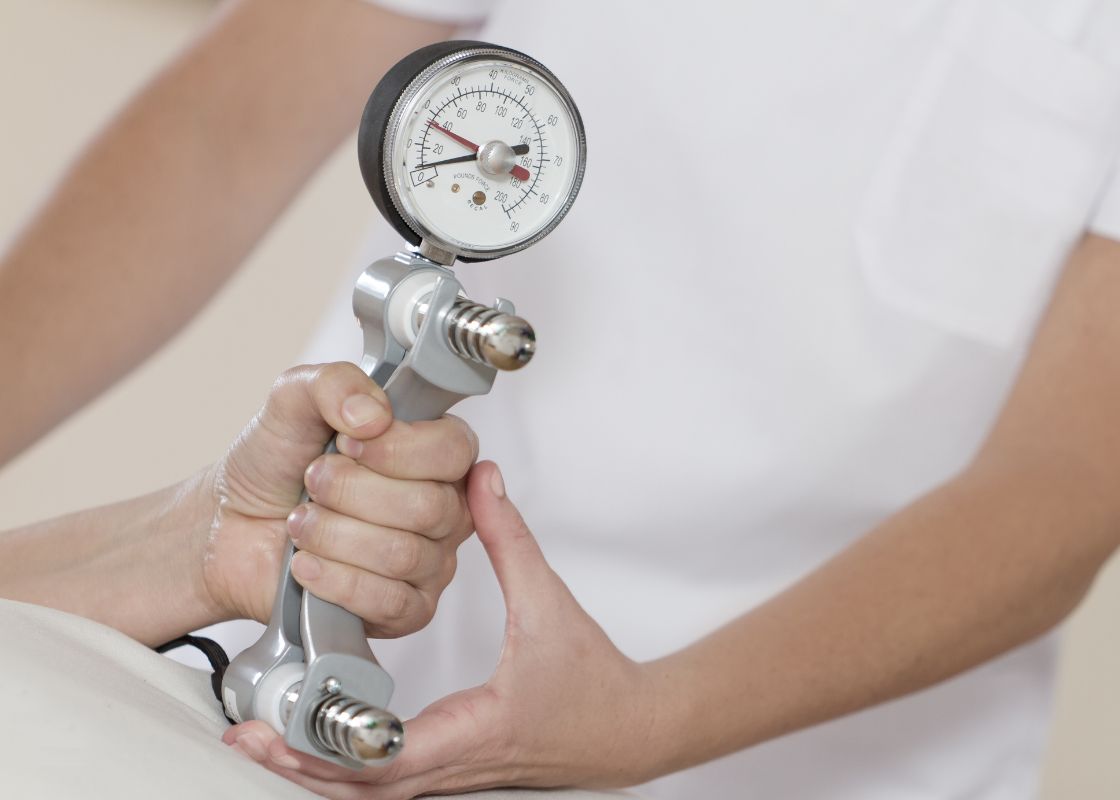
Once You Have Access to a Dynamometer, Take These Steps:
- Hold your arm out and bend your elbow to a 90-degree angle
- As hard as is possible, squeeze the dynamometer
- Avoid jerking
- Keep the grip smooth and controlled
- Repeat this action two more times
- Calculate the average of the three separate readings – that will be your grip strength level
Take this underrated marker of health seriously. Your grip strength and your overall health go hand in hand.

Katrina Jenkins
Author, Licensed Massage Therapist
Katrina Jenkins graduated from Towson University in 2013 with a Bachelor’s Degree in Health Science and worked as a nurse’s aide briefly before pursuing her true passion. She graduated from the Massage Therapy Institute of Colorado in April 2016 with honors and completed the Touch of Healers Scholarship Program the following summer. She has been a part of the Moyer Total Wellness Team since the summer of 2017.
Resources
Brennan, Dan. “What to Know about Grip Strength and How to Measure It.” WebMD, 29 June 2021, www.webmd.com/fitness-exercise/what-to-know-grip-strength-how-to-measure.
Centers for Disease Control and Prevention. “Heart Disease Facts.” CDC, CDC, 24 Oct. 2024, www.cdc.gov/heart-disease/data-research/facts-stats/index.html.
Chang, Connie. “Why Your Grip Strength Matters, and How to Improve It.” The New York Times, 19 Oct. 2023, www.nytimes.com/2023/10/19/well/move/grip-strength-muscles-health.html.
Fu, Liyuan, et al. “Perioperative Poor Grip Strength Recovery Is Associated with 30-Day Complication Rate after Cardiac Surgery Discharge in Middle-Aged and Older Adults – a Prospective Observational Study.” BMC Cardiovascular Disorders, vol. 19, no. 1, 27 Nov. 2019, https://doi.org/10.1186/s12872-019-1241-x. Accessed 15 Dec. 2024.
LeWine, Howard. “Grip Strength May Provide Clues to Heart Health – Harvard Health Blog.” Harvard Health Blog, 19 May 2015, www.health.harvard.edu/blog/grip-strength-may-provide-clues-to-heart-health-201505198022.
Pelc, Corrie. “Losing Grip Strength, Slowing down May Be Dementia Warning Signs.” Medicalnewstoday.com, Medical News Today, 7 May 2023, www.medicalnewstoday.com/articles/losing-grip-strength-slowing-down-may-be-dementia-warning-signs. Accessed 27 Oct. 2025.
Raju Vaishya, et al. “Hand Grip Strength as a Proposed New Vital Sign of Health: A Narrative Review of Evidences.” Journal of Health, Population and Nutrition, vol. 43, no. 1, 9 Jan. 2024, jhpn.biomedcentral.com/articles/10.1186/s41043-024-00500-y, https://doi.org/10.1186/s41043-024-00500-y.
“Stronger Hands Linked to a Healthier Heart.” Harvard Health, 23 Feb. 2016, www.health.harvard.edu/heart-health/stronger-hands-linked-to-a-healthier-heart.
Photo Credit
Canva by microgen
Canva by ruizluquepaz